

Paid advertorial · Independent publisher; not the product provider
A laboratory technician pipetting a blood sample into a tube

Published July 29, 2026

You Changed Your Routine Six Months Ago What Can a Biological Age Estimate Actually Show?

You started sleeping earlier. You cut the evening drinks, added two runs a week, took the stress at work a little less personally. Some weeks you feel the difference and some weeks you don't, and after a while you're left with a fairly ordinary question: is any of this landing anywhere, or does it just feel like it should be?

See How GlycanAge Works A wellness test you take at home, read with a specialist

Most people judge whether a habit is working by how they feel, which is a reasonable instinct and an unreliable instrument. Feeling depends on sleep, mood, weather and what happened at work on Tuesday.

That's part of why at-home biological age testing has drawn so much attention over the last few years. This piece looks at what “biological age” is actually meant to describe, where a standard blood panel stops short, what people tend to want from a test like this, and how one option, GlycanAge, presents itself. It is a consumer wellness product rather than a medical device, and that distinction matters throughout.

Chronological Age Is a Blunt Instrument

Two people born in the same month can be in visibly different shape at fifty. Everyone accepts this intuitively, and yet the only number most of us carry around is the one on our passport, which advances at exactly the same rate regardless of anything we do.

The idea behind biological age testing is to produce a second number: an estimate of how your body appears to be faring, derived from a measurable biological marker rather than from a birthday. It is an estimate, not a verdict, and different tests measure different things to arrive at it.

What makes the category interesting to people is less the number itself and more the possibility of a comparison. One reading is a baseline. Two readings, taken far enough apart, are the beginning of a trend.

Where a Standard Panel Stops Short

Routine bloodwork is genuinely valuable and nothing here suggests otherwise. It's designed to flag specific things a clinician is looking for, within reference ranges built around the general population, and it does that job well.

What it isn't designed to do is summarise how a year of lifestyle changes has landed. A result inside the normal range tells you it's inside the normal range. It doesn't tell you whether you're at the better or worse end of your own personal history, or whether the direction of travel over eighteen months has been upward or downward. That gap, between “nothing flagged” and “is this actually going well?”, is the space wellness tests are trying to occupy. It's a genuine gap, and it's also one worth approaching with realistic expectations.
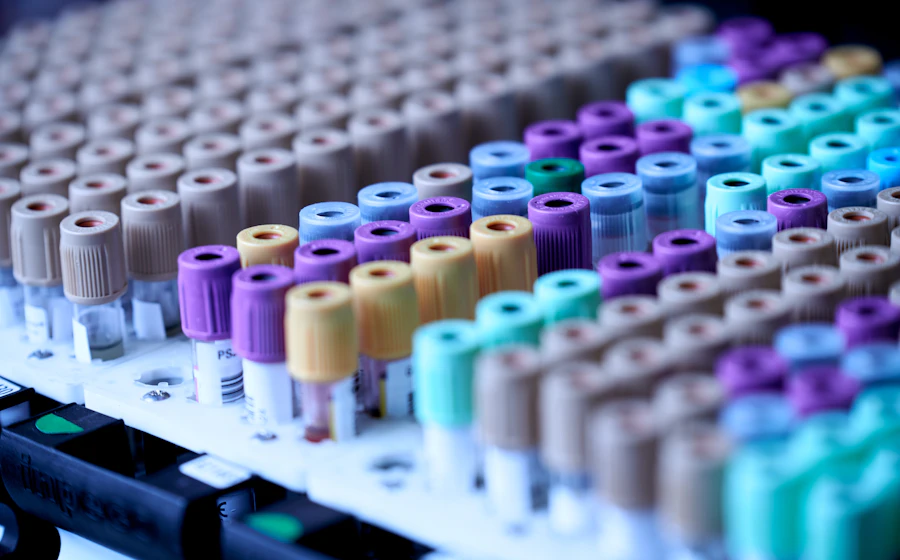
Racks of colour-coded blood sample tubes in a laboratory
Samples are analysed in a certified laboratory. One result is a baseline; the comparison between two of them is where most of the interest sits.

What People Actually Want From a Test Like This

Nobody taking a home wellness test wants to become an amateur immunologist. The useful version is a result they can understand, in context, without needing a background in the underlying science.

In practice, that tends to mean a few specific things:

  • A sample they can collect at home without a clinic visit
  • A clear result rather than a wall of raw values
  • Someone to walk them through what it means
  • A marker that can actually change, so retesting is meaningful
  • Plain honesty about what the test does not tell them

That last point is the one that gets skipped most often, and it's arguably the most important of the five.

A Few Things Worth Weighing First

Before ordering any at-home wellness test, a handful of practical points are worth thinking through rather than assuming they're all equivalent. Check what the test actually measures and whether the laboratory is accredited. Look at the turnaround time, whether interpretation is included or costs extra, and what the retest cadence looks like, since a single reading on its own has limited value.

It's also fair to keep expectations grounded. A wellness test of this kind is not a diagnostic tool. It does not detect, diagnose, treat, cure or prevent any disease, and a result is not a substitute for consulting a doctor. Any measurement carries an error margin, and outcomes vary considerably from person to person. If something about your health concerns you, that is a conversation for a qualified healthcare professional rather than a report.

Who Tends to Get the Most From It

GlycanAge tends to suit people who are already changing something and want a way to look at it.

  1. People mid-way through a lifestyle change

    A baseline taken now is what makes a reading twelve months from now mean anything at all.

  2. Anyone tracking long-term habits

    Sleep, training and stress management are slow-moving. A yearly check-in matches that pace better than a weekly one.

  3. People who prefer a number to a feeling

    If “I think I feel better” has never been convincing to you, this category exists for that reason.

  4. Those who want the result explained

    Every plan includes a one-to-one call, which is the difference between a report you read and one you understand.

  5. People who would rather not visit a clinic

    The sample is collected at home with a finger-prick kit and posted back in a prepaid envelope.

  6. Anyone comparing before and after

    The two-test bundle exists precisely for people who want a reading either side of a change.

Before You Order a Test

It helps to look at both what's included and where the honest limits sit, rather than only one of the two.

What's included

Plans and what each one covers

GlycanAge lists a one-off test at $499. Subscription options are $424 when testing every six months and $449 when testing every twelve, both cancellable, and a two-test bundle at $898. Every plan includes the full report, glycan profile and a one-to-one specialist call.

  • At-home finger-prick kit with prepaid return
  • Full report with biological age and glycan indexes
  • One-to-one interpretation call with a specialist
  • Results in three to four weeks; HSA/FSA eligible
What to check first

Five honest questions

A wellness test is not a diagnostic tool, and results vary between individuals. Knowing that beforehand tends to make the result more useful, not less.

  • It does not diagnose, treat, cure or prevent any disease
  • A single reading is a baseline; the trend needs a retest
  • Any measurement carries an error margin
  • Turnaround, shipping and availability vary by region

Prices shown are the figures listed by the provider at the time of writing and may vary by region, plan and promotion; subscription savings apply to recurring plans only. Confirm current pricing, shipping and terms with GlycanAge directly before purchasing. GlycanAge is a consumer wellness test, not a medical device or diagnostic service. It is not intended to diagnose, treat, cure or prevent any disease, and nothing on this page is medical advice. Always speak to a qualified healthcare professional about your health. This page may earn a commission from purchases made through its links.

A Closer Look at GlycanAge

The test is built around one specific marker rather than a broad panel. A few parts of it are worth understanding on their own terms.

What it actually measures

GlycanAge analyses glycans, sugar structures attached to immunoglobulin G antibodies, from a small blood sample. According to the provider, these patterns reflect chronic low-grade inflammation associated with the ageing process, a concept often referred to as inflammaging.

The company states the work sits on more than thirty years of glycobiology research and over 350 scientific publications, with analysis carried out in a CLIA-certified laboratory using triplicate sample analysis. Those are the provider's own figures and are presented here as such.

A biological age figure

The headline output is a number in years, presented against your chronological age so you can see whether the two are broadly aligned or diverging. The provider describes a stable biomarker with an error margin of around one year, which is worth reading alongside the result rather than after it.

Glycan indexes rather than one score

Alongside the headline figure, the report breaks the profile into indexes covering areas such as inflammatory activity and immune protection. That's the more useful part for most people, because it shows which component is driving the overall number.

A report written to be read

The report links the profile to lifestyle factors and highlights areas that may be worth discussing with a specialist. A sample report is published on the provider's site, which is a fair way to see the format before committing to anything.

A one-to-one interpretation call

Every plan includes a call with a GlycanAge specialist to walk through the report and what may be influencing the result. Interpretation is where most home tests fall down, so including it as standard rather than as an upsell is a meaningful design choice.

Built around retesting

The provider describes glycans as modifiable, which is the reason the plans are structured around repeat testing at six or twelve month intervals. Whether your own reading moves, and in which direction, depends on a great many factors outside any single product's control.

How It Works in Practice

The provider's testing process, described without treating the result as a diagnosis.

01

Choose a plan

Check current regional pricing, delivery availability and whether the order is one-off or recurring.

02

Collect the sample

Follow the supplied instructions for the at-home finger-prick blood sample and return packaging.

03

Wait for analysis

The provider currently describes a results window of roughly three to four weeks; timing can vary.

04

Review the estimate

Read the report and use the included interpretation call for context. Do not use it for diagnosis or treatment decisions.

What to Check Before You Choose

The material limits matter as much as the number in the report.

Estimate

Not an exact biological age

GlycanAge estimates biological age from IgG glycan patterns. It does not provide a definitive measure of how fast one individual is ageing.

Health

Not a diagnostic test

The provider states that the test does not detect disease, confirm a medical condition or replace clinical assessment.

Interpretation

A trend does not prove a cause

A later result cannot by itself prove that one diet, supplement, exercise programme or other lifestyle change caused the difference.

Practicalities

Check price, shipping and data terms

Prices, subscriptions and shipping vary by region. Review cancellation terms and the provider's handling of biological and health-related information before ordering.

Frequently Asked Questions

What is GlycanAge?

GlycanAge is an at-home wellness test that analyses IgG glycan patterns from a small blood sample and reports a biological age estimate alongside a set of glycan indexes. It is a consumer wellness product, not a medical device or diagnostic service.

How is this different from standard bloodwork?

A standard panel is ordered by a clinician to look for specific things within population reference ranges. This test looks at one particular marker and is designed to be repeated over time so you can compare readings. The two answer different questions and neither replaces the other.

How do I take the test?

The kit is posted to you. You register it, collect a sample using a finger-prick device at home, and return it in the prepaid envelope. The provider states results are available in three to four weeks.

Is an interpretation call included?

According to GlycanAge, every plan includes a one-to-one call with a specialist to walk through your report. Additional sessions can be booked separately.

What does it cost?

The provider lists a one-off test at $499, subscription plans at $424 for six-monthly testing and $449 for annual testing, and a two-test bundle at $898. Pricing can vary by region and promotion, so confirm current figures on the official site.

Can it tell me if something is medically wrong?

No. It is not a diagnostic test and is not intended to diagnose, treat, cure or prevent any disease. If you have a health concern, speak to a qualified healthcare professional rather than relying on a wellness report.

How accurate is the result?

The provider describes it as a stable biomarker analysed in triplicate in a CLIA-certified laboratory, with an error margin of around one year. As with any measurement, treat the figure as an estimate with a range around it rather than an exact value, and expect individual results to vary.

Give the Next Twelve Months Something to Compare Against

Habits and health indicators can change over time, but a biological-age estimate cannot prove that one routine caused a particular result. GlycanAge offers an at-home finger-prick kit, a report covering its biological-age estimate and glycan indexes, and a one-to-one interpretation call with current plans. Treat each result as one piece of wellness information to discuss with a qualified healthcare professional, not a diagnosis, treatment recommendation or definitive measure of progress.

Visit GlycanAge

Paid advertorial. diginovlog.com is an independent publisher and is not GlycanAge or its product-support team. We may receive compensation if you follow a featured link or purchase at the destination. GlycanAge controls pricing, availability and terms. This consumer wellness test is not diagnostic and must not be used to diagnose, treat, cure or prevent disease; consult a qualified healthcare professional. See our Advertising Disclaimer and Privacy Policy.